I. Por que o teste de desempenho de corantes é tão importante?
Na cadeia de produção e processamento têxtil, o desempenho dos corantes determina diretamente a estabilidade da cor e a vida útil de um produto. Especialmente em ambientes de alta temperatura — como durante a passagem a ferro, a fixação por prensa térmica e a impressão por transferência térmica — certos corantes (particularmente os corantes dispersos) são propensos à “sublimação”, ou seja, à transição direta do estado sólido para o gasoso, levando à migração da cor, desbotamento ou manchas em tecidos adjacentes.
Esse possível problema não afeta apenas a aparência do produto acabado, mas também pode levar a reclamações dos consumidores, devoluções e até mesmo prejudicar a reputação de uma marca. Portanto, é crucial realizar uma avaliação sistemática do desempenho dos corantes usando um testador profissional de solidez da cor à sublimação.
II. Princípio de funcionamento do testador de solidez da cor à sublimação
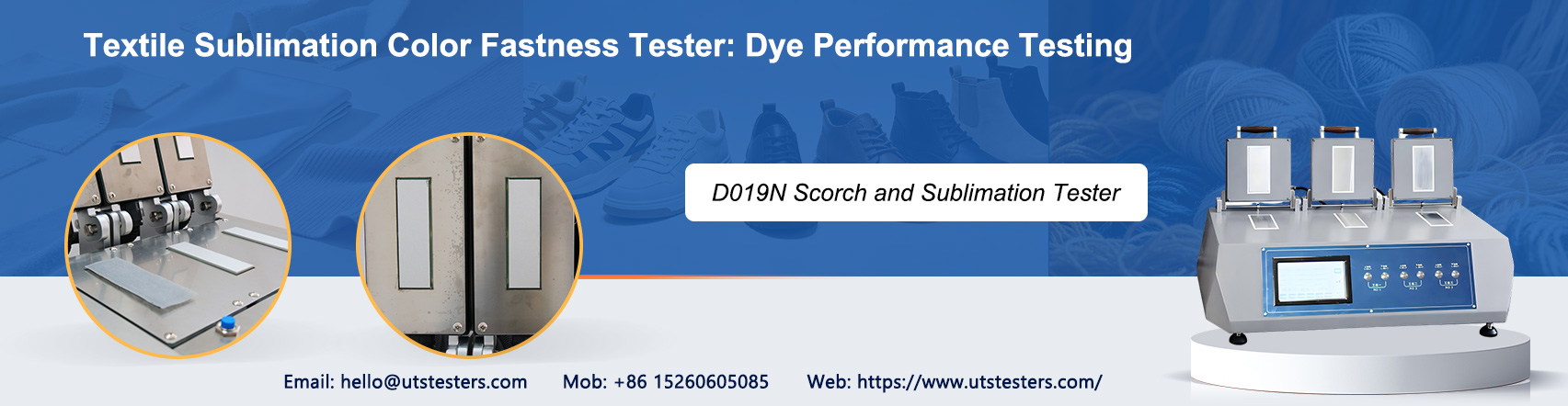
O princípio central do testador de solidez da cor à sublimaçãoé simular ambientes reais de processamento em alta temperatura. Durante o teste, o corpo de prova tingido a ser avaliado é colocado em camadas com um tecido de suporte padrão (normalmente tecido branco de algodão ou poliéster) e posicionado entre placas de aquecimento superior e inferior, onde passa por tratamento de calor e pressão sob condições especificadas de temperatura, pressão e tempo.
Durante o teste, se as moléculas do corante sublimarem em altas temperaturas, elas migrarão do corpo de prova para o tecido de suporte, resultando em transferência de cor visível. Após a conclusão do teste, a solidez da cor à sublimação do corante pode ser avaliada quantitativamente comparando a mudança de cor do próprio corpo de prova (descoloração do corpo de prova original) com o grau de transferência de cor no tecido de suporte.
III. Principais normas aplicáveis
Os testes de solidez da cor à sublimação devem seguir rigorosamente métodos padrão reconhecidos internacionalmente e pela indústria. As normas comuns incluem:
1. ISO 105-P01: Método de teste para solidez da cor de têxteis ao calor seco (sublimação).
2. GB/T 5718: Norma nacional chinesa correspondente à ISO 105-P01, aplicável aos testes de solidez da cor ao calor seco de diversos materiais têxteis.
3. GB/T 6152: Método de teste para solidez da cor de têxteis à prensa térmica, abrangendo diversos modos de teste, como prensagem a seco, prensagem úmida e prensagem com umidade.
4. AATCC 133: Norma da Associação Americana de Químicos e Coloristas Têxteis para solidez da cor à prensa térmica.
5. JIS L 0850: Norma Industrial Japonesa que especifica as condições específicas de teste para solidez da cor à sublimação.
IV. Breve descrição do procedimento de teste
Na prática, o teste de solidez da cor à sublimação normalmente segue estas etapas:
Primeiro, corte o corpo de prova e o tecido de suporte nas dimensões padrão, garantindo que o corpo de prova esteja plano, sem rugas e livre de impurezas. Em seguida, coloque o tecido de suporte na placa de aquecimento inferior, cubra-o com o corpo de prova com a face voltada para cima, abaixe a placa de aquecimento superior e aplique a pressão padrão.
Em seguida, ajuste a temperatura-alvo (por exemplo, 180°C) e a duração do teste (por exemplo, 30 segundos) no painel de controle do instrumento e inicie o aquecimento. Quando as placas de aquecimento superior e inferior atingirem a temperatura definida e se fecharem, o temporizador iniciará automaticamente. Ao atingir o tempo definido, o instrumento emitirá um sinal sonoro; levante as placas de aquecimento e remova rapidamente o corpo de prova e o tecido de suporte.
Finalmente, deixe o corpo de prova esfriar e equilibrar em um ambiente padrão de temperatura e umidade e, em seguida, use uma escala de cinza para avaliar o nível de descoloração do corpo de prova e o nível de transferência de cor do tecido de suporte. Para dados mais precisos, os valores de diferença de cor (ΔE) podem ser medidos usando um espectrofotômetro.
V. Conclusão
À medida que as exigências dos consumidores em relação à qualidade têxtil continuam aumentando e a cadeia global de fornecimento têxtil dá cada vez mais importância à sustentabilidade e à segurança, os testes de desempenho dos corantes evoluíram de um requisito “opcional” para um requisito “obrigatório”. Um testador confiável e fácil de usar de solidez da cor à sublimação permite que as empresas controlem com precisão a estabilidade da cor durante processos de alta temperatura, garantindo assim a qualidade do produto.
E-mail: hello@utstesters.com
Direto: + 86 152 6060 5085
Telefone: +86-596-7686689
Web: www.utstesters.com


 +86 152 6060 5085
 English
 русский
 español
 português
 العربية
 Polski



 hello@utstesters.com
 hello@utstesters.com
 +86 152 6060 5085
 +8615260605085