Abrasion testers measure how well a fabric resists wear and rubbing. Pilling testers assess fuzz-ball formation on the fabric surface. Both tests protect quality control and product performance, because a garment that wears thin or pills early loses value quickly.
Understanding how abrasion and pilling testers differ helps buyers match the instrument to the fabric and end use. Working principles, methods, applications, standards, and cost all shape that choice. An Oscillatory Abrasion Tester and an ICI Pilling Box Tester serve different purposes, and suppliers such as UTS International offer both types, so the comparison stays fit-based and neutral.
Key Takeaways
-
Abrasion testers measure how well fabric resists rubbing and wear.
-
Pilling testers check for fuzz balls that form on the fabric surface.
-
Choose a tester based on fabric type and the standards your customers require.
-
Many labs need both testers to check durability and appearance.
-
Match the tester to your lab's sample load and budget for best results.
Abrasion vs. Pilling: Core Differences
What Abrasion Testing Measures
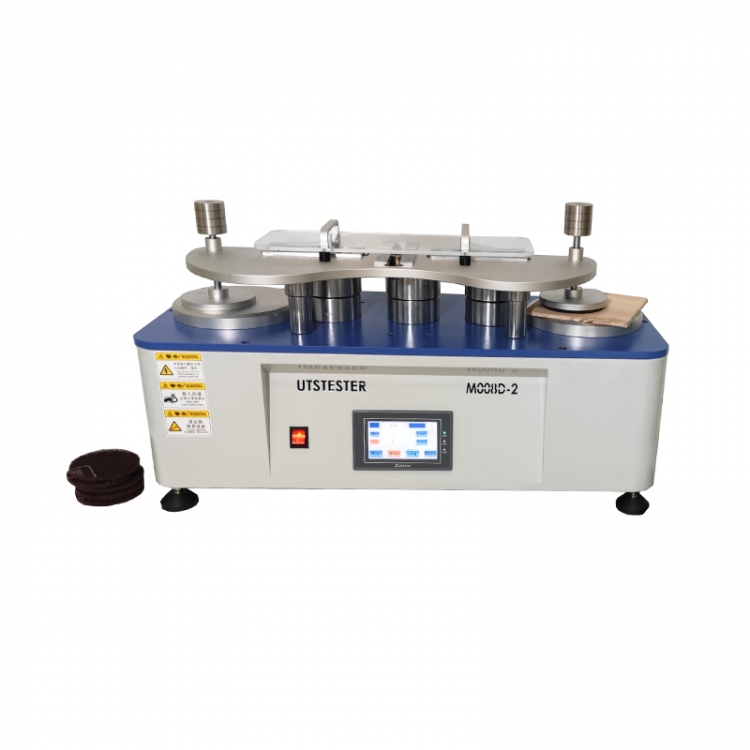
Abrasion testing measures surface wear from rubbing. A machine presses a fabric sample against an abrasive surface and moves the two against each other. The test records how many cycles the fabric survives before a hole appears, or how much mass and appearance change after a set number of rubs. An Oscillatory Abrasion Tester reproduces this rubbing motion in a controlled, repeatable way.
This measurement matters because wear shortens a product's life. A jacket cuff that thins after a few months, or upholstery that scuffs through at a seam, fails the customer even when the fabric looks fine on the shelf. Abrasion data lets manufacturers predict that failure before the product ships.
What Pilling Testing Measures
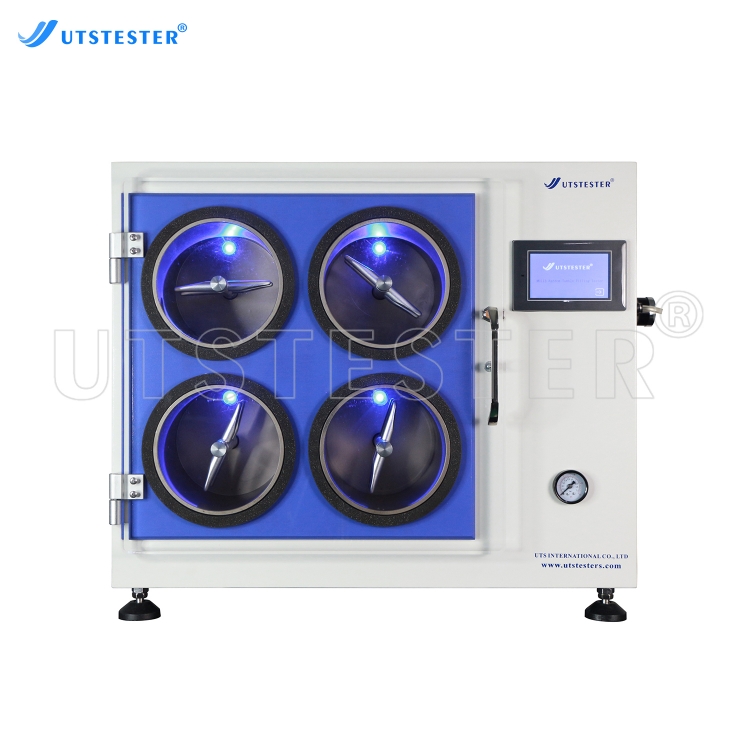
Pilling testing measures fuzz-ball formation on the fabric surface. Loose fibers work their way out of the yarn structure and tangle into small balls under friction. The test rubs fabric against fabric or against a lining, then rates the surface against visual standards or counts the pills. A Random Tumble Pilling Tester tumbles samples in a cork-lined chamber to generate this friction.
Pilling matters because it changes appearance, not strength. A sweater can stay structurally sound while its surface turns rough and fuzzy. Consumers judge that fabric as worn out. Pilling tests therefore protect the visual quality that abrasion tests cannot capture.
The two tests answer different questions. Abrasion asks how long the fabric lasts. Pilling asks how long the fabric looks new. A lab may run both on the same sample, and an ICI pilling box tester often sits beside an abrasion unit for exactly that reason.
How Abrasion Testers Work
Principles and Methods: Martindale, Taber
Abrasion testers share one core principle: they rub a fabric sample against an abrasive partner under controlled pressure and count the cycles until failure. The Martindale method moves a circular specimen in a widening Lissajous pattern against an abradant, which mimics the multi-directional rubbing of upholstery and apparel in real use. The Taber method mounts the sample on a rotating turntable and lowers abrasive wheels onto it, producing a directional scrub that suits stiff, coated, and industrial fabrics.
Method choice follows fabric behavior. Soft knits and woven apparel usually go to Martindale, while luggage, tarpaulins, and floor coverings often suit Taber wheels. Labs that test both flexible and rigid materials keep a Martindale unit and a wheel-based unit side by side. An Oscillatory Abrasion Tester adds a third option for labs that need a compact, repeatable rubbing motion on smaller specimens.
Applications, Standards, and Cost
Typical applications include apparel cuffs and collars, upholstery, automotive trim, and workwear. Each market ties its acceptance limits to a named standard. Martindale testing follows ISO 12947 and ASTM D4966, while Taber testing follows ASTM D4060. AATCC 93 covers accelerated abrasion for woven fabrics. Buyers should confirm that the instrument supports the standard their customers cite, because test geometry and abradant differ between methods.
Cost varies with specimen capacity, motor control, cycle counting, and whether the unit runs one station or several. A single-station benchtop model costs far less than a multi-station floor unit with digital reporting. Calibration support and spare abradants add ongoing expense. Neither tester type is inherently superior; the right choice depends on the fabric and the standard, which is exactly where abrasion and pilling testers differ in purpose and where a supplier such as UTS International can match the instrument to the lab.
How Pilling Testers Work
Principles and Methods: Martindale, ICI Box
Pilling testers generate controlled friction on a fabric surface, then rate the fuzz balls that form. The Martindale method uses the same Lissajous rubbing motion as its abrasion counterpart, but the sample rubs against itself or a standard abradant at low pressure. Operators compare the tested surface to photographic rating scales after set cycles. This approach suits woven apparel and upholstery, where gentle multi-directional rubbing mirrors daily use.
The ICI Pilling Box Tester takes a different route. It places samples in cork-lined boxes that tumble at a fixed rotation, so the fabric rubs against itself and the lining. This tumbling action mimics the friction a sweater meets inside a crowded wardrobe or during wear. Knitwear, fleece, and wool blends are its typical candidates. Labs choose between the two methods based on fabric structure and the standard their buyers cite.
Applications, Standards, and Cost
Typical applications include knitwear, sweaters, fleece, bedding, and upholstery. Martindale pilling follows ASTM D4970 and ISO 12945-2, while the box method follows ISO 12945-1. Buyers should confirm the instrument matches the standard named in their customer's specification, because rating scales and test conditions differ between methods.
Cost depends on station count, timer control, and box or plate configuration. A basic single-unit pilling tester costs less than a multi-station model with digital cycle logging. Consumable abradants and cork linings add modest ongoing expense. Neither method outperforms the other across all fabrics; each fits a specific fabric family and standard, which is one more way abrasion and pilling testers differ in practical use.
How Abrasion and Pilling Testers Differ
Performance, Application Fit, and Compliance
The two instrument families diverge on what they measure and how they report it. Abrasion testers count cycles to failure or track mass and appearance change after a set number of rubs. Pilling testers rate surface change against visual scales after fixed cycles. That difference shapes every downstream decision, from sample preparation to the acceptance limit a buyer writes into a specification.
|
Criterion
|
Abrasion Testers
|
Pilling Testers
|
|
Technical performance
|
Counts rub cycles to hole or wear; reports mass and appearance change
|
Rates fuzz-ball formation against visual scales after set cycles
|
|
Application fit
|
Apparel cuffs, upholstery, automotive trim, workwear, coated and industrial fabrics
|
Knitwear, sweaters, fleece, bedding, upholstery
|
|
Regulatory compliance
|
ISO 12947, ASTM D4966, ASTM D4060, AATCC 93
|
ASTM D4970, ISO 12945-1, ISO 12945-2
|
|
Cost profile
|
Rises with station count, motor control, and digital cycle counting
|
Rises with station count, timer control, and box or plate configuration
|
Application fit drives the first decision. A lab testing workwear and luggage needs abrasion data, and a Martindale unit or an Oscillatory Abrasion Tester covers the flexible side while wheel-based methods handle rigid stock. A lab testing sweaters and fleece needs pilling ratings, and an ICI Pilling Box Tester or a Martindale pilling head covers that ground. Compliance narrows the field further. Each standard fixes test geometry, abradant, and rating method, so an instrument must support the exact standard a customer cites.
Cost Drivers Compared
Purchase price tracks mechanical complexity and throughput, not tester category. Multi-station units cost more than single-station benchtops because they multiply fixtures, motors, and control electronics. Digital cycle logging and programmable timers add cost on both sides. Consumables differ as well: abrasion testing wears through abradants and backing materials, while pilling testing consumes cork linings and standard abradants at a slower pace.
Lab capacity shapes the budget as much as unit price. A high-volume apparel lab may justify several stations to keep turnaround short, while a small quality lab can meet its load with one benchtop unit. A random tumble pilling tester suits labs that need the tumbling method alongside box or Martindale pilling, and it adds a third pilling option rather than replacing the others.
Suppliers such as UTS International carry both instrument types, so the conversation stays fit-based. The question is not which tester wins. The question is which tester matches the fabric, the standard, and the lab's throughput. That framing explains how abrasion and pilling testers differ in practice: one measures durability under rubbing, the other measures surface appearance under friction, and each answers a question the other cannot.
Choosing Between Abrasion and Pilling Testers
Matching Tester to Fabric and End Use
Fabric type narrows the choice quickly. Stiff, coated, and industrial fabrics such as luggage, tarpaulins, and floor coverings call for abrasion data, and a wheel-based method or an oscillatory abrasion tester fits that work. Soft knits, sweaters, fleece, and bedding call for pilling ratings, because their failure mode is surface fuzz rather than structural wear. Upholstery sits in both camps, so a lab testing it often needs abrasion cycles and pilling grades from the same sample.
End use sharpens the decision further. Workwear and automotive trim face heavy rubbing, so buyers prioritize abrasion resistance. Knitwear and blankets face friction between surfaces, so buyers prioritize pilling performance. A supplier such as UTS International can walk a lab through this mapping, because the right instrument follows the failure the customer actually sees.
Balancing Compliance, Budget, and Capacity
Compliance sets a hard boundary. A customer specification that names ISO 12947 or ASTM D4966 rules out any instrument that cannot run that geometry. A specification that names ASTM D4970 or ISO 12945-1 and ISO 12945-2 does the same on the pilling side. Buyers should collect the cited standards first, then shortlist instruments that support them. This step prevents a costly purchase that fails audit.
Budget and capacity then shape the final pick. Single-station benchtop units suit small quality labs with modest sample loads. Multi-station models raise throughput for high-volume apparel labs, and the extra stations justify their price through faster turnaround. Consumables belong in the same calculation: abrasion testing wears through abradants steadily, while pilling testing consumes cork linings at a slower pace.
Many labs ultimately need both tester types. A single garment program may require abrasion cycles for cuffs and pilling grades for the body fabric, and one instrument cannot deliver both. Labs that run the tumbling method alongside box or Martindale pilling add a Random Tumble Pilling Tester as a third option, while labs that test both flexible and rigid stock pair an ICI Pilling Box Tester with a wheel-based abrasion unit. Planning the bench layout around both families avoids a second purchase round later.
The decision framework stays simple. Match the instrument to the fabric and end use, confirm the relevant standards, weigh technical performance against budget, and size capacity to the lab's sample load. That framework explains how abrasion and pilling testers differ in daily practice, and it keeps the purchase tied to real testing needs rather than to a single headline specification.
Abrasion testers measure wear resistance under rubbing, while pilling testers measure surface fuzz-ball formation. Each instrument answers a different quality question, and neither replaces the other.
Selection follows a clear framework: application fit, relevant standards, technical performance, and cost. A lab testing workwear prioritizes abrasion cycles. A lab testing knitwear prioritizes pilling grades. Buyers should confirm the cited standard first, then weigh station count and consumables against budget and sample load.
Readers should match the instrument to their fabric and end-use requirements. Many labs ultimately need both tester types, because one garment program often demands abrasion data and pilling ratings together. That is how abrasion and pilling testers differ in practice.
FAQ
Can one instrument perform both abrasion and pilling tests?
No single instrument covers both tests. A Martindale unit can run abrasion and pilling methods with different fixtures, yet it still reports two separate results. Labs that need both data sets usually keep dedicated units, such as an Oscillatory Abrasion Tester alongside a pilling station, to avoid constant reconfiguration.
Which fabrics suit the ICI Pilling Box Tester best?
The ICI Pilling Box Tester fits knitwear, sweaters, fleece, and wool blends. Its tumbling action mimics the friction these fabrics meet during wear and storage. Woven apparel and upholstery usually go to Martindale pilling instead, because that method follows the standard those markets cite.
When does a lab need a Random Tumble Pilling Tester?
A lab adds a Random Tumble Pilling Tester when a customer specification calls for the tumbling method or when samples need a third pilling option. It complements box and Martindale pilling rather than replacing them. Buyers should confirm the cited standard before adding this unit to the bench.
Do abrasion and pilling tests share the same standards?
No. Abrasion testing follows standards such as ISO 12947, ASTM D4966, ASTM D4060, and AATCC 93. Pilling testing follows ASTM D4970, ISO 12945-1, and ISO 12945-2. Each standard fixes its own geometry, abradant, and rating method, so buyers should collect the cited standards first.
How many stations does a typical lab need?
Station count follows sample load. A small quality lab can meet its load with one benchtop unit. A high-volume apparel lab may justify several stations to keep turnaround short. Consumables belong in the same calculation, since abrasion testing wears through abradants faster than pilling testing wears through cork linings.


 +86 152 6060 5085

 English
 русский
 español
 português
 العربية
 Polski



 hello@utstesters.com
 hello@utstesters.com
 +86 152 6060 5085
 +8615260605085
